
Homeopathy for Growing Pains
Growing pains have the worst timing.
They don’t show up at your convenience.
They show up when everyone’s asleep… or when you’re trying to get out the door… or when your child suddenly collapses onto the couch saying, “My legs hurt.”
When my oldest started complaining about leg pain, we did what most parents do, we asked the doctor.
The response?
“Oh, that’s just growing pains. There’s not much you can do. You can give Tylenol or ibuprofen if she’s uncomfortable.”
And I remember thinking…
Yeah. No thanks.
Not because I’m anti-medicine.
But because if there’s a natural, effective option that supports the body instead of overriding it, I want to know about it.
As a family, we’ve chosen to use pharmaceuticals when they’re truly needed or when alternatives aren’t available.
You do you, boo. Truly.
What I do advocate for is informed consent, knowing your options and choosing intentionally instead of defaulting to “there’s nothing else you can do.”
And it turns out… there was something we could do.
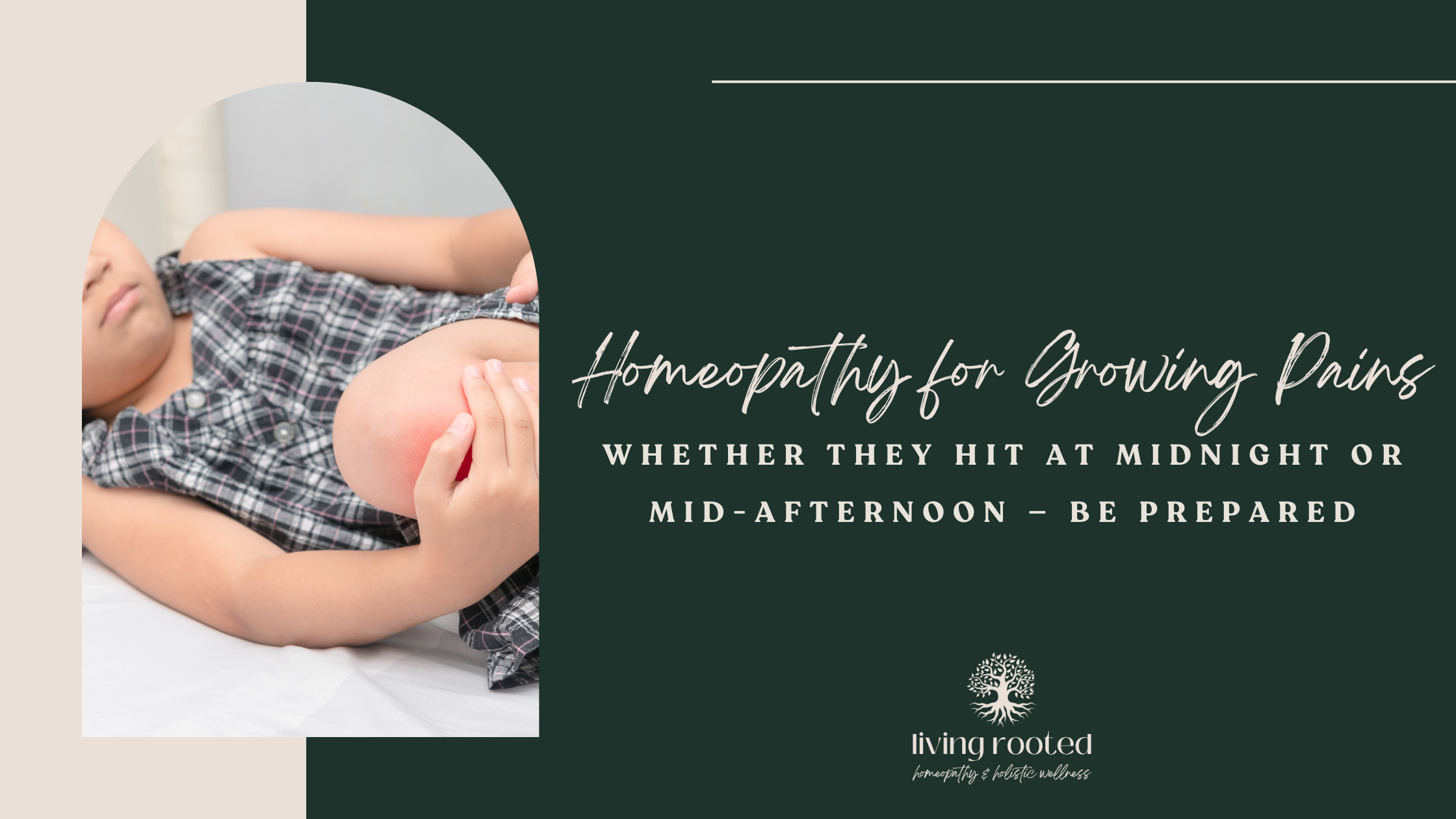
What Growing Pains Usually Look Like
Growing pains tend to:
Appear out of nowhere
Be worse in the evenings or at night
Come and go over weeks or months
Move around (one night it’s calves, another night it’s thighs)
Magically disappear by morning
They’re frustrating because they’re real, but often brushed off.
This is where homeopathy quietly shines.
Two Remedies I Always Reach for First
Calcarea Phosphorica (Calc Phos)
This is a cell salt, and it’s a favorite for kids in growth phases.
Calc Phos is often helpful when:
Legs feel weak or achy
Pain extends down the legs, especially with walking
There’s restlessness in the legs
Calf cramps show up during growth spurts
Think: bones growing faster than the body wants to keep up.
Magnesia Phosphorica (Mag Phos)
If growing pains had a MVP, this would be it.
Mag Phos is a classic for:
Cramping pains
Pain that moves (legs → thighs → calves)
Pain that’s worse at night
Relief from pressure, rubbing, or warmth
If your child instinctively wants you to massage their legs or put something warm on them, this remedy is often a slam dunk.
How We Use Them
6X or 30C both work beautifully
Can be taken when pain begins
Or given in the evenings if growing pains have been showing up regularly
Simple. Gentle. Effective.
And yes, you can keep them right in your home first aid kit.
Why I Chose Homeopathy (and Never Looked Back)
Homeopathy checked all the boxes for our family:
Non-invasive
Non-toxic
No long-term side effects
Safe to use repeatedly when needed
But what really sold me? The results.
The pain eased.
The episodes came less often.
And my child slept, which meant we slept.
That kind of win sticks with you.
This is exactly why I created my Homeopathic First Aid Guide, so you’re not making decisions from fear at 2am.
➡️ [Grab the First Aid Guide here]
A calm, practical reference for real-life moments.
And yes, this is also where having a homeopath on your team matters.
Not because every scrape is an emergency, but because discernment is learned, not guessed.
Rooted and Rooting for you,

My goal is to empower you to take charge of your health, know your body, know what true health looks like within your body, and know when to seek guidance.
Disclaimer: Claims based on traditional homeopathic practice, not accepted medical evidence. Not FDA evaluated.
Jessica is not a physician and the relationship between Jessica and her clients is an educational one. It is fully the client’s choice whether or not to take advantage of the information Jessica presents. Homeopathy doesn’t “treat” an illness; it addresses the entire person as a matter of wholeness that is an educational process, not a medical one. None of this is. medical advice.
